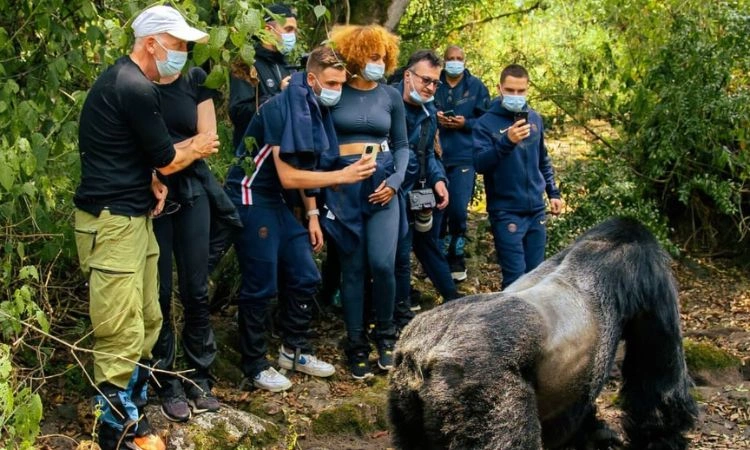
Gorilla Trekking in Uganda for backpackers. If there is one wildlife encounter on Earth that stops you dead in your tracks, leaves your chest tight with awe, and rearranges something deep inside you — it is standing face to face with a wild mountain gorilla in the misty forests of Uganda. For backpackers who have been chasing authentic, off-the-beaten-path experiences across Africa, gorilla trekking in Uganda is not just an activity. It is the reason you came.
This guide is written specifically for budget-conscious, adventurous travellers who want the full gorilla experience without the fluff of overpriced luxury packages. From permits and packing lists to getting there on a shoestring, here is everything you need to know.
Why Uganda Is the Best Place on Earth to Trek Gorillas
Uganda is home to roughly half of the world’s remaining mountain gorillas — a critically endangered species with fewer than 1,100 individuals left in the wild. Bwindi Impenetrable National Park and Mgahinga Gorilla National Park in the country’s southwestern corner harbor over 50 habituated gorilla families spread across ancient, fog-covered forest that has survived for more than 25,000 years without human clearing.
Compared to Rwanda’s Volcanoes National Park — where permits cost $1,500 per person — Uganda offers the same life-defining experience at $800 per permit. For backpackers watching every dollar, that $700 difference is a bus ticket, a week of accommodation, and a few extra days exploring Queen Elizabeth National Park. Uganda wins on value, wins on raw wilderness, and wins on authenticity.
Beyond the gorillas themselves, Uganda’s trekking landscape is extraordinary. Bwindi’s four trekking sectors — Buhoma, Ruhija, Rushaga, and Nkuringo — each offer a different character of forest, different gorilla families, and different levels of trek difficulty. Whether you are a fit hiker who wants the challenge of Nkuringo’s steep ridges or a first-timer who would prefer the gentler trails of Buhoma, there is a trek suited to you.
Getting to Bwindi: Transport Options for Backpackers
Getting to Bwindi from Kampala or Kigali is one of the most common questions backpackers ask — and the good news is there are solid options for every budget.
From Kampala: The overland journey from Kampala to Bwindi takes roughly 8 to 10 hours by road. Public buses run from Kampala to Kabale (the nearest large town), from where shared taxis and boda-bodas can be arranged onward to the park. If you are planning to travel in a small group and want a more reliable, comfortable option, booking a private transfer makes enormous sense given the distances involved. Kigali Transfers to Bwindi operates well-maintained 4×4 vehicles between Kampala, Kigali, and all four sectors of Bwindi — their drivers know the roads intimately and can arrange flexible pick-up times to match your trekking schedule.
From Kigali, Rwanda: One of the most popular backpacker routes is flying into Kigali and crossing the border overland into Uganda. The drive from Kigali to Bwindi takes approximately 4 to 5 hours via the Cyanika border crossing, passing through some of the most dramatic highland scenery in East Africa. For this cross-border journey, Pick and Transfer Safaris offers dedicated transfers that include border crossing assistance — invaluable if it is your first time navigating the Rwanda-Uganda border with a backpack. Their 3 Days Uganda Gorilla Trekking package is also a popular option for travellers who want transport, permits, and accommodation bundled without breaking the bank.
Once in Bwindi, you will need to plan which sector your gorilla permit is assigned to, as each sector requires you to be in a specific location the night before your trek. Check our full Travel Guide for detailed sector-by-sector breakdowns, road conditions, and border crossing tips.
Gorilla Permits: What You Need to Know
The gorilla trekking permit is the single largest cost of the entire experience, and it is non-negotiable — you cannot enter the forest without one. In Uganda, permits are issued by the Uganda Wildlife Authority (UWA) and cost $800 per person per trek. Each permit grants you one full hour with a habituated gorilla family.
Permits must be booked in advance — often months ahead during peak season (June to September and December to February). Walk-in permits are extremely rare and should not be relied upon. Reputable operators like Kenlink Tours can secure permits on your behalf as part of a full Uganda safari package, which is often the most reliable route for backpackers who cannot easily call the UWA offices from abroad.
A few permit tips for backpackers:
Permits are non-refundable but can sometimes be transferred to another date with sufficient advance notice. The UWA allocates a maximum of eight trekkers per gorilla family per day, which means group sizes are tiny and the experience remains intimate. Budget an additional $15 to $20 for ranger fees and tips on the day of the trek.
What to Expect on Trek Day
Trekking days begin early. You will report to the UWA ranger station at your sector by 7:30 AM for a briefing. Rangers divide trekkers into groups of eight and assign each group to a habituated gorilla family. A team of experienced trackers will have gone ahead at dawn to locate the family’s overnight sleeping nest and radio back their position.
Then you walk. Trek duration varies enormously — anywhere from 30 minutes to a full day depending on where the gorillas have moved. The forest is steep, dense, and gloriously wild. You will push through tangles of strangler figs and wild ginger, cross muddy ridges, and hear birds you have never heard before. A walking stick (provided at the ranger station) is your best friend.
When you find them, time stops. The Uganda Wildlife Authority allows a maximum of one hour with the family. Silverbacks the size of small cars will glance at you with total indifference. Juveniles will wrestle and shriek in the canopy. Mothers will nurse their infants just metres from where you stand. No zoo, no documentary, no photograph will have prepared you for the reality of it.
After the hour is up, you hike back to the ranger station where certificates of completion are issued — one of the more meaningful pieces of paper you will ever hold.
Budget Accommodation Near Bwindi
Backpackers are sometimes surprised to discover that budget accommodation options near Bwindi exist and are genuinely good. The most popular budget lodges cluster around the Buhoma and Rushaga sectors. For around $30 to $60 per night, travellers can find clean rooms, hot showers, good local food, and staff who understand trekking logistics inside out.
Camping is also available at some community campsites near Buhoma for under $15 per night — a genuine backpacker option that puts you right at the forest edge. Keep in mind that nights at Bwindi’s altitude (averaging around 1,600 metres) are significantly cooler than in Kampala, so a warm sleeping layer is essential.
If you are combining your gorilla trek with a broader safari — perhaps adding a game drive through Queen Elizabeth National Park or chimpanzee tracking in Kibale Forest — Kenlink Tours’ 7-Day Wildlife and Primate Safari covers both parks at a price point that works for serious budget travellers. The Our Safaris page also lists multi-day itineraries that combine gorilla trekking with Queen Elizabeth game drives and are designed to be flexible for independent travellers.
What to Pack for Gorilla Trekking
Packing right makes the difference between a comfortable trek and a miserable one. Here is what experienced trekkers recommend:
Wear long-sleeved shirts and long trousers — not for warmth alone, but to protect your arms and legs from nettles, insects, and the general scratchiness of dense undergrowth. Neutral colours (olive, khaki, dark green) are ideal. Avoid bright colours and, especially, avoid anything blue — blue apparently attracts biting flies in equatorial forests.
Waterproof hiking boots are essential. The forest is almost always damp and the trails are muddy year-round, with the rainy seasons (March to May and October to November) making conditions particularly challenging. Gaiters are a worthwhile addition.
A rain poncho or light waterproof jacket should be at the top of your daypack, along with at least two litres of water, snacks, sunscreen (for the walk-in and walk-out through open terrain), and a small first aid kit. Cameras are permitted, but flash photography is strictly prohibited as it distresses the gorillas.
Leave your heavy main backpack at your lodge. On trek day, a 20-litre daypack is all you need.
Combining Gorilla Trekking with Other Uganda Adventures
For backpackers with more than a week, Uganda rewards extended exploration. Gorilla trekking pairs beautifully with chimpanzee tracking in Kibale National Park — the latter being one of the highest-density chimpanzee habitats on the continent. The boat safari along the Kazinga Channel in Queen Elizabeth National Park offers hippo-packed river viewing on a budget, and the drive between Bwindi and Queen Elizabeth takes you through some of Uganda’s most spectacular highland-to-savannah transition scenery.
Travellers crossing from Rwanda can also explore the Volcanoes National Park for golden monkey tracking before crossing into Uganda — a great two-country primate adventure that adds enormous depth to any East Africa backpacking itinerary.
For transport between parks and across borders, Kigali Transfers to Bwindi’s fleet page shows the range of vehicles available — from compact cars for solo travellers to larger safari vans for groups of up to ten. Booking a dedicated transfer between parks often works out cheaper than trying to piece together multiple shared taxis, particularly when carrying luggage.
Practical Tips Before You Go
Best time to visit: The dry seasons — June to September and December to February — offer the most reliable trekking conditions. Trails are drier, forest paths are more navigable, and the probability of finding gorillas without an all-day hike is higher. That said, trekking in the rainy season is entirely possible and the forest looks extraordinarily lush and green.
Visas: Most nationalities require a Ugandan visa, available online via the e-visa portal or on arrival at Entebbe International Airport. The standard tourist visa costs $50. Citizens of East African Community member states enter visa-free.
Health: Yellow fever vaccination is mandatory for entry into Uganda. Malaria prophylaxis is strongly recommended — Bwindi sits in a malaria-risk zone despite its altitude. You must also not trek if you have flu, a cold, or any respiratory illness, as mountain gorillas are extremely susceptible to human diseases.
Currency: Uganda uses the Ugandan Shilling. US dollars are widely accepted for major transactions like permits and accommodation, but carry shillings for local transport, food, and tips.
Ready to make it happen? Contact the team at Kigali Transfers to Bwindi to plan your transfers, or book your gorilla permit through Kenlink Tours to get the full safari experience sorted in one go. For self-drive backpackers who want maximum flexibility, Pick and Transfer’s car hire options give you full control of your itinerary with reliable 4×4 vehicles built for Uganda’s roads.

Leave a Comment