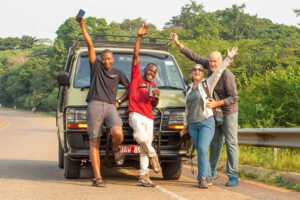
Our guide to Kigali Rwanda–Uganda gorilla and wildlife safaris provides all the essential information you need for a smooth and memorable journey across the two countries. From border crossing requirements and visa information to gorilla trekking permits, transportation, accommodation, and safari activities, we cover everything travelers should know before their adventure. Discover the best routes from Kigali to Bwindi, Mgahinga, Volcanoes National Park, and Uganda’s top wildlife destinations. Whether you are planning gorilla trekking, chimpanzee tracking, game drives, or cultural tours, our guide helps you travel with confidence while enjoying the breathtaking beauty and unique wildlife experiences of Rwanda and Uganda.
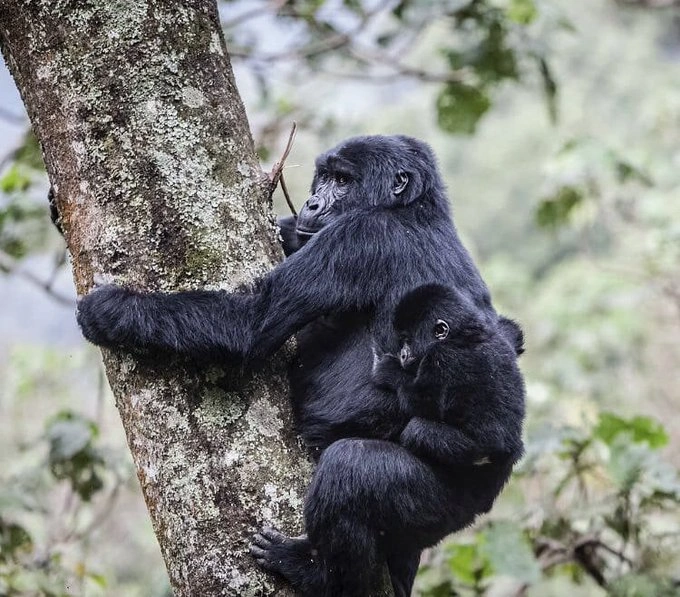
Mountain Gorillas of Bwindi Impenetrable Forest
Bwindi Impenetrable National Park in southwestern Uganda is one of the most biodiverse places on Earth — and the world’s most critical sanctuary for the endangered mountain gorilla (Gorilla beringei beringei). With over half the world’s entire wild population calling Bwindi home, this ancient forest represents the absolute pinnacle of wildlife encounters on the planet.
The park’s extraordinary forest, estimated at over 25,000 years old, survived the last Ice Age and now shelters more than 120 mammal species, 350 bird species, and 200 butterfly species — alongside its iconic primate residents. A gorilla trekking permit grants you one precious, life-changing hour with a habituated gorilla family in their natural home.
About Bwindi — Key Facts
- Designated a UNESCO World Heritage Site in 1994 for its outstanding biodiversity
- Spans altitudes from 1,160m to 2,607m across the Albertine Rift Valley escarpment
- Home to approximately 459 individual mountain gorillas across 50+ habituated and non-habituated groups
- The forest has never been cleared for agriculture — a genuine relic of primordial Africa
- 23 Albertine Rift endemic bird species are found here, making it a world-class birding destination
Gorilla Families You Can Visit
Bwindi has four trekking sectors — Buhoma, Ruhija, Rushaga, and Nkuringo — each hosting multiple habituated gorilla families. Below are the most sought-after groups visitors can track.
Mubare Group
Buhoma
SectorBuhoma — North
History1991 · First habituated group
Members~11 individuals
Lead SilverbackKanyonyi
Trek DifficultyModerate
Best ForFirst-time trekkers
Habinyanja Group
Buhoma
SectorBuhoma — North
Name Means”Place of water reeds”
Members~17 individuals
Lead SilverbackMakara
Trek DifficultyModerate–Hard
Best ForActive trekkers
Rushegura Group
Buhoma
SectorBuhoma — North
Name Means”Ekifumbiko plant”
Members~16 individuals
Lead SilverbackKabukojo
Trek DifficultyEasy–Moderate
Best ForFamilies & elderly
Nkuringo Group
Nkuringo
SectorNkuringo — South
Altitude~2,400 m
Members~19 individuals
Lead SilverbackSafari
Trek DifficultyStrenuous
Best ForAdventure seekers
Oruzogo Group
Ruhija
SectorRuhija — East
Altitude~2,300 m
Members~22 individuals
Lead SilverbackTibirikwata
Trek DifficultyHard
Best ForExperienced hikers
Busingye Group
Rushaga
SectorRushaga — South
Name Means”Peace”
Members~10 individuals
Lead SilverbackBusingye
Trek DifficultyModerate
Best ForPhotography lovers
How Gorilla Trekking Works
The trekking process is well-organised and fully guided by Uganda Wildlife Authority rangers. Here is exactly what to expect on trek day from start to finish.
1
7:30 AM — Park Briefing
All trekkers assemble at the UWA sector headquarters. Check in your permit, receive a ranger briefing on gorilla safety rules, photography guidelines, and health protocols. This usually takes about 30 minutes.
2
Group Assignment
You are split into groups of maximum 8 people per gorilla family. Physical fitness and age are considered when matching trekkers to gorilla families and their terrain. Share your fitness level with the rangers honestly.
3
Enter the Forest
Ranger guides lead you through the forest with armed escorts for wildlife safety. Porters ($15–$20) are available and highly recommended on steep routes. Trek duration varies from 1 hour to a full day of 8 hours, depending on gorilla location.
4
The One-Hour Visit
Once you locate the gorillas, your exclusive 60-minute window begins. Stay at least 7 metres away at all times. Keep voices low. Crouch if a gorilla approaches. Follow every ranger instruction without hesitation — your safety depends on it.
5
Photography Rules
No flash photography under any circumstances. All lens types are permitted. If a gorilla charges, do not run — crouch, avert your gaze, and wait. Gorilla charges are almost always bluffs, but running triggers a genuine pursuit response.
6
Certificate & Community
After the hour ends, trek back to the trailhead and receive your official gorilla trekking certificate from UWA. Optionally, visit the Batwa cultural trail or local community craft markets before returning to your lodge.
Permit Cost by Category
| Country | Visitor Category | Fee (USD) |
|---|---|---|
| 🇺🇬 Uganda | Foreign Non-Resident | $800 |
| 🇺🇬 Uganda | Foreign Resident | $700 |
| 🇺🇬 Uganda | East African Citizen | $80 |
| 🇷🇼 Rwanda | All Foreign Visitors | $1,500 |
| 🇺🇬 Uganda | Habituation Experience (4 hrs) | $1,500 |
💡 Permit Booking Tips
- Book 3–6 months ahead for June–September and December–February peak seasons
- Permits are issued by Uganda Wildlife Authority (UWA) through licensed operators
- Children under 15 years of age are not permitted on gorilla treks
- Bring a face mask — a human cold can be fatal to gorillas
- If you feel unwell on trek day, you will be turned away for the gorillas’ protection
Travelling from Kigali, Rwanda to Bwindi, Uganda
The overland journey from Kigali International Airport to Bwindi Impenetrable Forest is one of East Africa’s most scenic drives — winding through volcanic highlands, lush banana plantations, and the dramatic Congo Nile ridge. Here is everything you need to know.
The Journey — Stop by Stop
Kigali, Rwanda — Departure
Starting PointAltitude: 1,567m
Depart early — ideally by 6:00 AM — for a comfortable arrival at Bwindi before dark. Kigali is a clean, safe, and well-organised capital. Stock up on USD cash, snacks, and any medications before leaving. ATMs become increasingly scarce as you head west.
Musanze / Ruhengeri
~1.5 hrs from KigaliOptional Stop
Gateway to Rwanda’s Volcanoes National Park and the Virunga volcanic chain. An excellent breakfast stop with several cafes. Fuel up here. Views of the volcanoes — Karisimbi, Bisoke, and Muhabura — dominate the skyline on clear mornings.
Cyanika / Bunagana Border Crossing
~2.5–3 hrs from Kigali🛂 Border Post
The most convenient crossing for this route. Cyanika (Rwanda side) connects to Bunagana (Uganda side) in Kisoro District. The border is generally efficient — process takes 30–60 minutes for most nationalities. The East Africa Tourist Visa is accepted here.
Kisoro, Uganda
~30 min from BorderUganda Entry Town
A characterful highland town set against dramatic volcanic scenery. Brief stop for Ugandan Shillings and fuel. The road towards Bwindi begins climbing steeply through terraced hillsides growing Irish potatoes and sorghum. The landscapes are breathtaking.
Kabale Town
~1.5 hrs from KisoroOptional Stop
The largest town in southwestern Uganda — the “Switzerland of Africa” for its hilly green landscape. Excellent lunch stop with local restaurants. ATMs, pharmacies, and supermarkets. If heading to Ruhija or Rushaga sectors, your route passes near here.
Bwindi Impenetrable Forest 🏁
Total: ~8–10 hoursDestination
The final leg from Kabale to Buhoma (approximately 65km) is unpaved murram road and takes 2–3 hours in a 4×4. Check in at your lodge, eat a warm meal, and rest well. Brief yourself on tomorrow’s trek time and starting point before sleeping.
Transport Options
🚐
Private Safari Transfer — Recommended
Door-to-door private 4×4 vehicle with a professional driver-guide. Includes hotel or airport pickup in Kigali, full border crossing assistance, scenic narration, and lodge drop-off at Bwindi. The safest and most comfortable option, essential for the unmaintained final road section.
⭐ Kenlink Tours speciality — book with us directly
✈️
Charter Flight — Fastest Option
Aerolink Uganda and Fly Uganda operate charter and scheduled flights from Kigali or Entebbe to Kihihi airstrip (~40-minute drive to Buhoma) or Kisoro airstrip (~20 minutes to Nkuringo sector). Saves an entire day of driving but costs significantly more.
🚌
Public Transport — Budget Option
Possible but not recommended. Requires multiple taxi-brousses from Kigali to the border, shared taxis or boda-boda motorbikes inside Uganda, and significant luggage management challenges. Not advisable with substantial gear or after rainfall.
🛣️ Road Conditions — Sector by Sector
- Kigali → Musanze → Border: Excellent tarmac, well-maintained year-round
- Bunagana Border → Kisoro: Good tarmac road, scenic mountain terrain
- Kisoro → Kabale: Mixed tarmac and murram, scenic but bumpy in places
- Kabale → Buhoma (North Bwindi): Unpaved murram, 4×4 mandatory, very slippery during rains
- Kabale → Ruhija (East): Partially tarmac, partially murram — 4×4 advisable
- Kisoro → Nkuringo (South): Steep unpaved road, 4×4 essential at all times
Distance & Time Reference Chart
| Route Segment | Distance | Drive Time | Road Type |
|---|---|---|---|
| Kigali City → Musanze / Ruhengeri | ~100 km | 1.5 hrs | Tarmac — Excellent |
| Musanze → Cyanika Border Post | ~40 km | 1 hr | Tarmac — Good |
| Bunagana Border → Kisoro Town | ~15 km | 30 min | Tarmac |
| Kisoro → Kabale Town | ~60 km | 1.5–2 hrs | Mixed Tarmac / Murram |
| Kabale → Buhoma (Bwindi North) | ~65 km | 2–3 hrs | Murram — 4×4 Only |
| Kisoro → Nkuringo (Bwindi South) | ~35 km | 1.5–2 hrs | Murram — 4×4 Only |
| TOTAL: Kigali → Buhoma Bwindi | ~280 km | 8–10 hrs | — |
Visa & Border Crossing Information
Planning your entry into Uganda and Rwanda is straightforward for most nationalities. The East Africa Tourist Visa is the single most important document for this route — covering both countries on one application.
⭐
East Africa Tourist Visa — The Smartest Choice
Valid for Uganda · Rwanda · Kenya | Single Application | $100 USD Total
The East Africa Tourist Visa grants multiple entries across Uganda, Rwanda, and Kenya within 90 days for a single fee of just USD $100. For travellers doing a Kigali-to-Bwindi gorilla circuit, this eliminates the need to apply separately for both a Rwandan and Ugandan visa — saving money, time, and paperwork hassle at the border.
✓Multiple cross-border entries within 90 days
✓Valid across Uganda, Rwanda, and Kenya
✓Apply online before travel — no queuing
✓Only $100 total — saves vs. two individual visas
✓Available at visas.immigration.go.ug
🇺🇬
Uganda Visa
Republic of Uganda — Entry Requirements
Visa on ArrivalAvailable at major entry points
e-Visa Portalvisas.immigration.go.ug
Standard Fee$50 USD — Single Entry
Multiple Entry$100 USD — 6 months
Visa Validity90 days from date of entry
Stay PermittedUp to 90 days per visit
ProcessingInstant (VOA) · 3–5 days (e-Visa)
Visa-FreeAll EAC nationals + select African countries
Key BorderBunagana · Katuna · Entebbe Airport
Yellow FeverRequired — Original certificate mandatory
CurrencyUgandan Shilling (UGX)
ExtensionsAvailable at Kampala immigration office
🇷🇼
Rwanda Visa
Republic of Rwanda — Entry Requirements
Visa on ArrivalAvailable for most nationalities
e-Visa Portalmigration.gov.rw
Standard Fee$30 USD — 30-day Single Entry
Multiple Entry$60 USD — 90 days
Visa Validity30 days (extendable at DGI)
Stay PermittedUp to 30 days, extendable to 90
ProcessingInstant (VOA) · 3–5 days (e-Visa)
Visa-FreeAll African Union member states (100+ nations)
Key EntryKigali International Airport · Cyanika Border
Yellow FeverRequired from endemic countries
CurrencyRwandan Franc (RWF)
ExtensionsAvailable at DGI offices in Kigali
📋 Essential Documents Checklist for This Trip
- Valid passport — minimum 6 months validity beyond your intended stay, with at least 2 blank pages for stamps
- Yellow Fever Vaccination Certificate — the original card (not a photocopy) is mandatory for entry into both Uganda and Rwanda
- Gorilla Trekking Permit — must be physically present on trek day. Carry both digital and printed copies as backup
- Visa or EAC Tourist Visa — applied for in advance via the e-visa portal, or obtained at border on arrival
- Proof of accommodation — lodge booking confirmations are frequently requested at the Bunagana border crossing
- Return or onward flight ticket — immigration officers at either border may ask for proof of onward travel
- Comprehensive travel insurance — essential for medical evacuation coverage from Bwindi’s remote location
- Emergency cash (USD) — border officers may ask for proof of sufficient funds for your stay (~$50 per day)
🦟 Health & Vaccination Requirements
- Yellow Fever: Original certificate is absolutely mandatory at both the Uganda and Rwanda borders — no exceptions
- Malaria prophylaxis: Both countries are malaria zones. Consult your doctor or travel clinic at least 4 weeks before departure. Common options: Malarone, Doxycycline, or Mefloquine
- COVID-19: No longer mandatory as of current regulations, but verify the latest requirements before travel
- Recommended vaccines: Typhoid, Hepatitis A & B, Meningitis (ACWY), Rabies (advisable for extended stays), and a Polio booster
- Gorilla health rule: If you have a cold, flu, or respiratory illness on trek day — you must not trek. Mountain gorillas share 98.3% of our DNA and are extremely vulnerable to human pathogens. Permits may be rescheduled but not refunded for health reasons.
Best Time to Visit Bwindi
Gorilla trekking is available all 12 months of the year — permits are never paused for season. However, your timing significantly affects trail conditions, rainfall, crowd levels, and permit availability.
🌞 Peak Dry Season
June – September
Best overall conditions. Trails are firm and drier, gorillas often move to lower forest altitudes making treks shorter and less strenuous. Clearer skies mean dramatic Virunga volcano panoramas. Demand is highest — book permits and lodges 4–6 months ahead.
☀️ Short Dry Season
December – February
Excellent alternative window. Second dry season with good trail conditions and a festive atmosphere over Christmas and New Year. Great photography light and comfortable temperatures. Permits also go very fast — advance booking essential.
🌧️ Long Rains
March – May
Green season advantages. Heavy daily rainfall makes trails slippery and treks more challenging on steep terrain. However, fewer tourists, lower lodge rates, lush vivid forest photography, and birding at its absolute finest with migratory species arriving.
🌦️ Short Rains
October – November
Shoulder season balance. Brief afternoon showers — morning treks usually stay dry. A good compromise between permit availability, accommodation pricing, trail conditions, and crowd levels. Increasingly popular with experienced safari travellers.
🌡️
Temperature & Climate
Bwindi’s altitude ranges from 1,160m to 2,607m. Daytime temperatures average 15–25°C (59–77°F), but mornings before the trek can drop to 7–12°C. Layer clothing to adjust. The forest interior is always cool, humid, and full of atmosphere regardless of season.
🐦
Birding Peak Season
Bwindi’s extraordinary birdlife peaks during March–May when migratory species arrive. Over 350 species recorded, including 23 Albertine Rift endemics: the African Green Broadbill, Shelley’s Crimsonwing, Short-tailed Warbler, and the elusive Grauer’s Rush Warbler.
🏔️
Altitude Considerations
Bwindi’s altitude rarely causes altitude sickness, but combined with humid forest air and steep terrain, physical exertion is significant. Stay fully hydrated, get adequate rest, arrive a day early if flying from sea level, and be honest about your fitness level at the briefing.
What to Pack for Gorilla Trekking
Packing correctly is the difference between a gruelling ordeal and a life-defining adventure. The forest is steep, humid, and unpredictable in all seasons.
Clothing
- Neutral long-sleeved shirts (khaki / green / grey)
- Convertible lightweight hiking trousers
- Warm fleece or light insulating jacket
- Waterproof rain poncho or hardshell jacket
- Moisture-wicking base layer
- Gaiters — highly recommended for all treks
- Wide-brim sun hat for forest gaps
- Warm beanie hat for cold mornings
- Thick wool or merino hiking socks (2–3 pairs)
Footwear
- Waterproof ankle-support hiking boots — essential
- Break boots in before the trip — blisters are brutal
- Camp sandals or flip-flops for lodge use
- Avoid: white shoes, open-toe sandals on trek
Gear & Equipment
- Trekking poles (available for hire locally)
- Day backpack 20–25L capacity
- Dry bags / zip-lock bags for electronics
- Reusable water bottle (2L minimum)
- Energy bars and high-calorie snacks
- Head torch with fresh spare batteries
- Portable power bank (fully charged)
Health & Hygiene
- DEET insect repellent (50%+ concentration)
- SPF 50+ sunscreen (apply before entering forest)
- Prescribed antimalarial tablets (full course)
- Personal first aid kit with blister plasters
- Hand sanitiser (use before & after trekking)
- Rehydration sachets for post-trek recovery
- Personal prescription medications (extra supply)
- Disposable face masks (required near gorillas)
Photography
- Camera body with a 200mm+ telephoto lens
- No flash — strictly prohibited at all times
- Extra memory cards and fully charged batteries
- Waterproof padded camera bag or dry bag
- Smartphone as backup — keep fully charged
Documents & Money
- Passport + printed and digital visa copies
- Gorilla permit — print AND digital backup
- Yellow Fever certificate — original card only
- USD cash for tips, souvenirs, and emergencies
- Travel insurance policy document (with 24hr number)
💰 Tipping Guide — A Helpful Reference
- UWA Ranger-Guide: $15–$25 USD per person for the full trek
- Trek Porter: $10–$20 USD — invaluable on steep terrain, carries your bag and steadies you on slippery slopes
- Tracker / Scout: $5–$10 USD if separate from the main ranger
- Lodge Staff: A general tip of 10–15% of the daily room rate left at departure is warmly received
- Driver (Kenlink Tours): $10–$20 per day for a multi-day transfer is customary and greatly appreciated
- Batwa Cultural Guide: $5–$10 USD if you join a community trail experience
Additional Experiences Near Bwindi
Your journey to Bwindi opens the gateway to some of East and Central Africa’s finest wildlife and cultural destinations — all within reach by road.
🦍
Chimpanzee Trekking — Kibale NP
Kibale National Park in western Uganda hosts the highest concentration of primates in Africa — including over 1,400 chimpanzees across the Kanyanchu community. A 4–5 hour drive from Bwindi. Combine both for an unforgettable dual primate safari.
🌋
Rwanda’s Volcanoes National Park
Parc National des Volcans offers its own gorilla trekking at $1,500 per permit, plus Golden Monkey tracking and dramatic volcano hikes — Mount Bisoke (3,711m) and the challenging Karisimbi (4,507m). An easy extension from Kigali before crossing into Uganda.
🎭
Batwa Cultural Trail — Bwindi
The Batwa pygmy community — the original forest custodians of Bwindi — lead guided cultural trails sharing ancient knowledge of medicinal plants, traditional honey harvesting, and indigenous forest lore. A deeply moving experience alongside the gorilla trek.
🌊
Lake Bunyonyi — The Islands Lake
One of Africa’s deepest and most scenic lakes, just 8km from Kabale. Over 29 islands dot its calm waters. Perfect for an overnight rest on the journey to or from Bwindi. Excellent kayaking, motorboat tours, and bird watching in a completely traffic-free environment.
🏙️
Kigali City — Rwanda’s Capital
Consistently ranked Africa’s cleanest and safest city. Visit the Kigali Genocide Memorial (sobering but essential), browse Kimironko Market, eat excellent food in Nyamirambo, and explore the city’s remarkable post-1994 transformation story before heading to the gorillas.
🐘
Queen Elizabeth National Park
A 3-hour drive north of Bwindi, Queen Elizabeth NP delivers classic savanna safari experiences: the famous tree-climbing lions of Ishasha, the Kazinga Channel boat cruise, elephant herds, hippo pools, and over 600 bird species. Ideal for a post-gorilla safari extension.