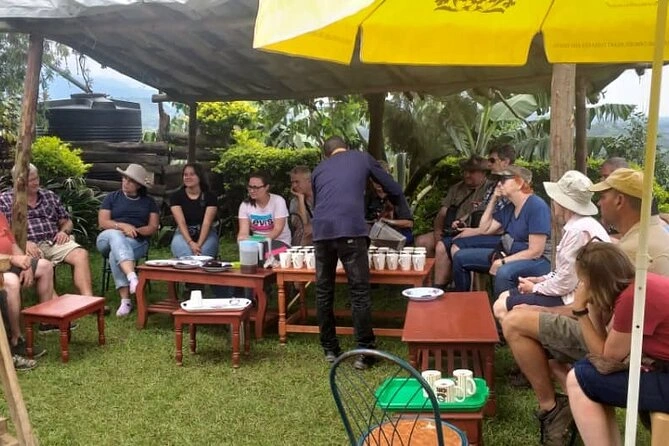
Farming experiences in Kisoro near Mgahinga National Park. Nestled in the far southwestern corner of Uganda, where mist-draped volcanoes pierce the clouds and terraced hillsides cascade like green staircases into fertile valleys, Kisoro District stands as one of the most visually breathtaking agricultural landscapes in all of East Africa. Often celebrated for its world-famous gorilla trekking and the iconic peaks of the Virunga Mountains, Kisoro holds an equally compelling story that is far less told — the story of its farmers, its harvests, and a centuries-old relationship between people and the land. For travelers passing through on a transfer to Bwindi or Mgahinga, slowing down to witness and participate in the farming experiences of Kisoro is an encounter with authentic Uganda that many visitors say leaves a more lasting impression than they ever expected.
Why Kisoro Is Uganda’s Most Remarkable Farming Landscape
Few places in Uganda command the kind of agricultural drama that Kisoro offers. The district sits at elevations ranging between 1,800 and 2,400 metres above sea level, creating a cool, moist highland climate that is perfectly suited to a diverse range of crops. The volcanic soils, enriched over millennia by the three great volcanoes of Mount Muhabura, Mount Gahinga, and Mount Sabyinyo, are exceptionally fertile and capable of sustaining multiple harvests per year. Every hillside, no matter how steep, has been carved into terraced plots that zigzag their way toward the forest edges of Mgahinga Gorilla National Park.
What makes Kisoro’s farming landscape so special is the seamless visual boundary between cultivated land and protected wilderness. In places, sorghum fields and potato gardens press right up against the park boundary fence, creating a living mosaic of community and conservation that is unique in Uganda. Farmers here have adapted their practices over generations to coexist with wildlife, even as mountain gorillas and golden monkeys occasionally venture beyond the forest edge. This juxtaposition of wild Africa and rural agriculture is something travelers can witness firsthand during a guided community walk, a farm visit, or simply by watching the morning activities unfold from the road as you travel toward Mgahinga or Bwindi.
The Crops That Define Kisoro’s Agricultural Identity
The farming calendar in Kisoro is shaped by two distinct rainy seasons and the highland climate, producing an extraordinary variety of crops that feed both local families and regional markets. The volcanic-rich soils are especially well suited to Irish potatoes, which are the district’s most commercially significant crop and the backbone of countless household economies. Fields of potatoes fan across the hillsides in geometric rows, tended by families who have planted, weeded, and harvested this crop for as long as anyone can remember.
Alongside potatoes, Kisoro farmers grow sorghum, maize, beans, peas, and a variety of vegetables including cabbages, carrots, and onions. Banana plantations occupy the lower, more sheltered slopes, while pyrethrum — a natural insecticide plant — grows in the cooler, higher zones closest to the forest. Perhaps most significantly for the specialty market, Kisoro has emerged in recent years as an important zone for high-quality Arabica coffee cultivation. The altitude, rainfall, and volcanic soils produce coffee beans with a nuanced, fruity complexity that has attracted attention from specialty roasters internationally. Sipping locally grown coffee in Kisoro, often served at small guesthouses or cafés in the town, is a sensory experience that connects the cup directly to the volcanic hillside where the beans were picked.
Meeting the Farmers: Community Tourism Around Mgahinga
One of the most rewarding ways to engage with Kisoro’s farming heritage is through the community tourism experiences available in the villages surrounding Mgahinga Gorilla National Park. These interactions, facilitated by local community guides, offer travelers an unhurried, genuine window into the daily rhythms of rural Kisoro life that no conventional tour could replicate.
In the communities of Nteko, Murora, and Rubuguri — all located within a short distance of the Mgahinga park gate — you can join farmers in the field during the harvest, learn to dig with a hand hoe alongside women in brightly coloured gomesi dresses, or watch the methodical process of winnowing beans by hand in the afternoon breeze. These are not staged demonstrations. They are real working farms belonging to real families, and visitors are welcomed with the warmth and curiosity that Kisoro communities are known for extending to travellers who show a genuine interest in their way of life.
Local guides are often members of the Batwa community — Uganda’s indigenous forest people who were displaced from the forest when Mgahinga was gazetted as a national park in 1991. For the Batwa, their relationship with the land goes back thousands of years, and a guided walk with a Batwa elder through the farmlands and forest fringe combines agricultural insight with some of the most profound cultural storytelling you will encounter anywhere in East Africa. Many travelers who include a Batwa community experience on their Mgahinga visit, facilitated through operators like Kenlink Tours, describe it as a transformative addition to their Uganda itinerary.
Farming as Conservation: The Buffer Zone Story
The zone immediately surrounding Mgahinga Gorilla National Park plays a critical ecological role as a buffer between the protected forest and the intensively farmed hillsides of the district. This buffer zone is where farming practices, conservation policy, and community livelihoods intersect most directly, and it is a landscape full of nuance and innovation.
Uganda Wildlife Authority and various conservation partners have worked with Kisoro farmers to develop agricultural practices in this zone that minimize crop damage from wildlife while also reducing pressure on the park’s forests. Beehive fences — rows of beehives strung on wires along field edges — have been introduced in some areas to deter elephants from raiding crops, capitalizing on elephants’ well-documented aversion to bees. Similarly, farmers are encouraged to plant crops that are less attractive to wildlife such as chilli peppers, pyrethrum, and tree tomatoes along the boundaries where farm meets forest.
These coexistence strategies represent some of the most thoughtful community conservation work being done anywhere near a primate park in Africa. Visitors who take time to walk the buffer zone with a guide gain an appreciation for the complex realities of conservation that goes far beyond anything they would learn during a gorilla trek alone. For those travelling to Mgahinga or Bwindi, incorporating a buffer zone farm walk adds real intellectual and emotional depth to the safari experience.
The Batwa Honey Harvest Experience
Among the most unforgettable agricultural traditions of the Kisoro highlands is the Batwa practice of wild honey harvesting. For millennia, the Batwa lived within the Mgahinga forest, and honey was among the most prized natural foods they gathered from the ancient trees. Today, though living outside the park, many Batwa families maintain beekeeping traditions in their farmland settlements, and guided visits to Batwa honey farms offer a fascinating and deeply cultural farm experience.
Watching the process of harvesting honey from traditional log hives — using smoke made from specific forest plants to calm the bees — while a Batwa elder explains each step in the local Kigezi dialect, translated by your guide, is the kind of slow, textured travel experience that the modern world rarely offers. The honey itself, dark and intensely flavored from the high-altitude wildflowers of the Virunga foothills, can often be purchased directly from the families who harvest it. It makes one of the most authentic, story-rich souvenirs a traveler can bring home from Uganda.
Visiting Kisoro Markets: Where the Harvest Comes to Town
Every week, the main market in Kisoro town transforms into a technicolor celebration of the district’s agricultural abundance. Farmers from every surrounding hillside descend on the market with sacks of Irish potatoes, baskets of beans, bundles of vegetables, and trays of fruit, creating a scene of controlled chaos and community commerce that is both visually spectacular and profoundly atmospheric.
Spending a morning at Kisoro market before or after your gorilla trek is one of the simplest and most rewarding ways to connect with the farming culture of the region. Prices are negotiated through a lively back-and-forth that is entertaining even if you don’t speak the local language, and vendors are generally happy to chat with curious visitors. The market also gives context to the landscape you have been driving through — each pile of potatoes and each bundle of sorghum represents someone’s hillside garden, their children’s school fees, and their household’s daily sustenance. The connection between land and livelihood is tangible and immediate in a way that few travel experiences can match.
For those planning their itinerary, the Kisoro market visit pairs naturally with a community walk in the buffer zone or a cultural tour organized through operators based in the region. Our travel guide can help you plan how to combine these community experiences with your gorilla trek permits and accommodation.
Golden Monkeys, Farming, and the Bamboo Edge
One of Kisoro’s most delightful farming curiosities is the relationship between local farmers and the golden monkeys that inhabit the bamboo forests of Mgahinga. Golden monkeys — found only in the Virunga highlands and listed as endangered — frequently move between the protected bamboo zones inside the park and the farmland immediately outside, particularly during fruiting and harvest seasons.
Farmers whose plots border the bamboo edge have learned to live with these charismatic primates, though not without occasional frustration when a troop descends on a maize field. Conservation programs have helped communities establish tolerant attitudes toward golden monkey presence, recognizing that the animals bring tourism revenue to the area through tracking experiences offered within the park. Travelers who combine golden monkey tracking inside Mgahinga with a community farm visit outside the park gain a rare and complete picture of how wildlife and agriculture coexist along this remarkable forest boundary. For information on golden monkey tracking and what to expect, the experts at Kenlink Tours provide excellent guidance for planning this experience.
How to Include Farming Experiences in Your Kisoro Safari
Adding community and farming experiences to a Kisoro visit requires very little extra planning but delivers disproportionately rich rewards. Most gorilla trekking itineraries, whether based around Mgahinga or the nearby southern sectors of Bwindi, allow a half-day or full afternoon that can be devoted to a community walk, market visit, or Batwa cultural experience without disrupting the wider safari program.
The best approach is to discuss your interest in farming and community tourism with your ground transport or safari operator before departure. If you are traveling from Kigali to Mgahinga or Bwindi, our comfortable safari vehicles can easily include a scheduled stop in Kisoro town or at a buffer zone community, and our drivers have extensive local knowledge of the region’s community programs.
For those who wish to go deeper, multi-day community stays are occasionally possible through organizations working directly with Kisoro farming families, allowing travelers to wake to the sounds of the highland morning — cowbells, birdsong, and the distant rumble of thunder over the volcanoes — and spend a full day immersed in the agricultural life of one of Africa’s most extraordinary landscapes. Whether you arrange your Kisoro farming experience independently or through a trusted partner like Kenlink Tours, the encounter with Kisoro’s farming communities will remain among the most vivid and human memories of your Uganda journey.
Plan Your Kisoro Farming and Gorilla Safari Today
Kisoro is far more than a stopover on the road to gorilla country. It is a destination in its own right — a landscape where volcanic fertility, ancient farming traditions, endangered wildlife, and warm community spirit combine into something genuinely extraordinary. Whether you spend an hour at the local market, a morning walking the buffer zone farms with a Batwa guide, or a full day participating in the harvest alongside a local family, the farming experiences of Kisoro near Mgahinga National Park will ground your wildlife safari in the living, breathing reality of southwestern Uganda.
We invite you to make Kisoro more than a checkpoint on your itinerary. Contact us today to discuss how we can build a comfortable, immersive transfer and safari experience that includes the very best of Kisoro’s community farming heritage alongside your gorilla trekking adventure in Bwindi or Mgahinga.


Leave a Comment