
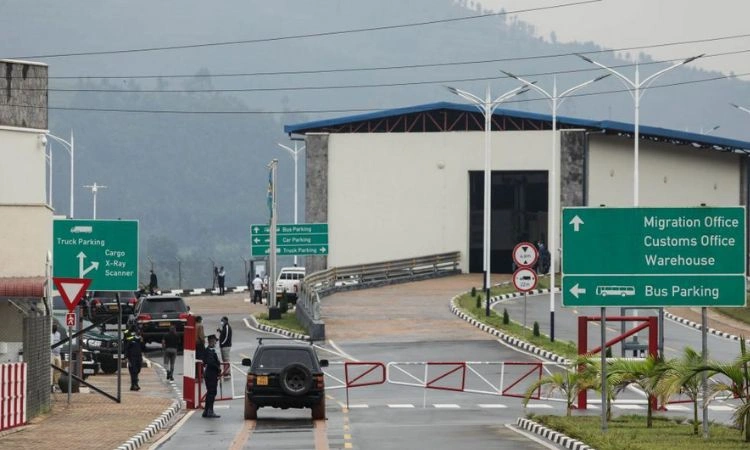
What is needed to cross from Rwanda to Uganda. The journey from Rwanda to Uganda is one of the most scenic and rewarding overland routes in all of East Africa. Rolling green hills give way to dramatic volcanic peaks, and the air grows cooler and thicker as you climb toward the ancient forests that shelter the world’s last mountain gorillas. For thousands of safari travellers each year, this border crossing is not just a formality — it is the gateway to one of the greatest wildlife experiences on earth. But crossing an international land border requires preparation, and arriving without the right documents means you will not cross at all. This guide covers everything you need to know: the documents, the border posts, the health requirements, and how to make the journey as smooth as possible from the moment you leave Kigali.
Is the Rwanda-Uganda Border Currently Open?
The short answer is yes, and the news is excellent for travellers. Following a difficult period of diplomatic tension that led to border closures between 2019 and 2022, both Rwanda and Uganda have fully normalized relations. As of 2026, the two main border crossings — Cyanika and Katuna — are both fully operational and welcoming tourists. The borders have also been modernized under a One Stop Border Post (OSBP) system, meaning Rwandan and Ugandan immigration officials operate side by side in a single shared facility, streamlining the crossing process significantly. With the right documents, most travellers clear the border in under an hour.
This is great news for anyone combining Rwanda and Uganda in a single safari itinerary. Whether you are flying into Kigali International Airport and heading to Bwindi for gorilla trekking, or finishing a Rwandan safari and crossing into Uganda for further wildlife adventures, the overland route is now safe, legal, and highly recommended. Explore our gorilla trekking safaris starting from Rwanda to see exactly how this journey can be packaged into a seamless experience.
Which Documents Do You Need to Cross?
This is the most critical part of your preparation. Missing even a single document can result in being turned back at the border, and no amount of goodwill or explanation will change an immigration officer’s mind if your paperwork is incomplete. Here is what you need.
A Valid Passport. Your passport must be valid for at least six months beyond your intended travel dates. This is a firm requirement for both entry into Rwanda on departure and entry into Uganda on arrival. East African Community nationals — Ugandans, Rwandans, and Kenyans — may cross using a valid national identity card, but all other nationalities must carry a passport.
A Valid Visa for Uganda. Unless you are a citizen of a visa-exempt country, you will need a Uganda visa before you reach the border. Uganda offers an online e-Visa system through the official government immigration portal, and the application can be completed from anywhere in the world. The visa typically costs USD 50 for a single-entry tourist visa. Processing takes between two and five business days, so apply well in advance. Print a copy and also save a digital version on your phone in case of poor internet connectivity at the border.
The East African Tourist Visa (EATV). For travellers visiting multiple countries — Rwanda, Uganda, and Kenya — the East African Tourist Visa is one of the best travel investments available. At just USD 100, this single visa grants you multiple-entry access to all three countries for 90 days. If you are flying into Kigali, you must apply through the Rwanda immigration portal (IREMBO). It is crucial to apply through the country of first entry. For a safari that begins in Rwanda and continues into Uganda, the EATV is almost always the smartest and most cost-effective visa option. Kenlink Tours has a detailed guide on Uganda safari planning and logistics at their Uganda safari bookings page that is worth reading before you finalize your documents.
Health Requirements: What Vaccinations Do You Need?
The Yellow Fever Certificate is non-negotiable. Uganda requires all incoming travellers to present a valid International Certificate of Vaccination, commonly known as the yellow card, as proof of yellow fever vaccination. Border officials will ask to see this document at both Cyanika and Katuna, and without it, you will not be permitted to enter Uganda. If you have not yet received the yellow fever vaccine, visit a registered travel clinic at least ten days before departure to allow the vaccine time to take effect.
Beyond yellow fever, while there are no other mandatory vaccinations required at the border, it is strongly recommended to be up to date on hepatitis A, typhoid, and malaria prophylaxis. Uganda is a malaria-risk country, and though the gorilla trekking forests are at high altitude and relatively low risk, the roads to and from the parks pass through lower-altitude areas where mosquitoes are more active. Speak to your travel health professional about the right antimalarials for your itinerary.
The Two Border Crossings: Cyanika vs. Katuna
Uganda and Rwanda share two main land border posts, and choosing the right one depends entirely on where you are heading inside Uganda.
The Cyanika Border sits at over 2,000 metres altitude between Musanze in Rwanda and Kisoro in Uganda, surrounded by the dramatic Virunga volcanic landscape. It is the quieter of the two crossings and significantly more popular with tourists and gorilla trekkers. The crossing typically takes between 30 minutes and one hour with the correct documents. From Cyanika, the drive to Bwindi’s southern sectors — Rushaga and Nkuringo — is roughly one to two hours, making this the ideal entry point for anyone heading to those trekking areas or to Mgahinga Gorilla National Park. Cyanika operates from 6:00 AM Rwanda time (7:00 AM Uganda time) and is not open 24 hours, so plan to arrive well before 9:00 PM.
The Katuna Border — known as Gatuna on the Rwandan side — is the busier of the two crossings and handles the bulk of commercial truck traffic between the two countries. Despite the commercial activity, it is equally viable for tourists and is open 24 hours. Katuna connects Kigali to Kabale on the Uganda side, making it the better choice for travellers heading to Bwindi’s Buhoma or Ruhija sectors, Lake Bunyonyi, Queen Elizabeth National Park, or continuing further north to Kibale Forest or Murchison Falls. To avoid heavy truck congestion, aim to arrive at Katuna before 10:00 AM or after 3:00 PM on weekdays. For a full multi-day safari that makes the most of this corridor, take a look at the 10-day Rwanda and Uganda safari package from Kenlink Tours.
The Time Difference You Must Not Forget
One detail that catches many travellers completely off guard is the time difference between Rwanda and Uganda. Rwanda operates on Central Africa Time (CAT), while Uganda runs on East Africa Time (EAT) — which is one hour ahead. If you leave Kigali at 8:00 AM, it is already 9:00 AM the moment you step into Uganda. For travellers doing a same-day transfer from Kigali to a lodge inside Bwindi, this hour matters enormously. Factor it into your planning, especially if you have a lodge check-in time or an evening trekking briefing to attend.
What to Expect at the Border Crossing
The actual crossing process is straightforward once your documents are in order. You will first go through Rwandan exit procedures, having your passport stamped and confirming your departure. You will then move to the Ugandan immigration counter — either in the same shared facility at Katuna or a short walk across at Cyanika — where officers will check your visa, passport, and yellow fever card. They may also ask for your accommodation details and contact information inside Uganda, so have your lodge booking confirmation readily available. Bags may be subject to inspection on the Rwandan side, and customs officials may ask about goods you are carrying, including electronics and personal items of value.
Getting to Bwindi After the Border
Once you have crossed into Uganda, the adventure truly begins. The roads leading from both border posts to Bwindi and Mgahinga wind through some of the most breathtaking highland scenery in Africa — steep terraced hillsides, eucalyptus forests, and crater lakes glittering in the valleys below. These roads can be challenging, particularly in wet conditions, and a capable 4×4 vehicle is strongly recommended.
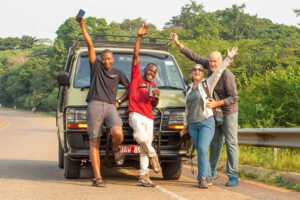
At Kigali Transfers to Bwindi, this is precisely what we do. Our professional drivers navigate the Kigali-to-Bwindi route daily, crossing at both Cyanika and Katuna depending on your assigned trekking sector. Our fleet of 4×4 safari vehicles — including Land Cruiser Jeeps, Toyota Prados, and comfortable Safari Vans — are purpose-built for Uganda’s mountain roads and fully equipped for your comfort and safety. We handle the logistics of the border, the road, and the timing so that you can focus entirely on what lies ahead: your gorilla trek.
For multi-day safari options that combine Uganda’s gorilla experience with world-class wildlife encounters, the 3-day Uganda gorillas safari and the 7-day gorilla and wildlife safari from Kenlink Tours are among the most popular packages for travellers crossing from Rwanda. Alternatively, explore all our safari packages or contact our team directly to build a custom itinerary tailored to your travel dates and budget. Our team is available around the clock and ready to guide you through every detail — from visa advice to the moment your vehicle pulls up outside your Bwindi lodge.
Related posts

Comments
[…] countries, you experience both — trekking gorillas in the Virunga forests, tracking chimps in Uganda’s Kibale and watching lions hunt on the savannah. The variety is […]