
These safari health tips every traveler should know will keep you strong and happy in the bush. East Africa is an incredible destination. But it does require some health preparation. A few simple steps before and during your trip prevent most problems. You focus on the wildlife, not on feeling unwell.
I once saw a trekker ignore the water advice. He drank tap water in a moment of carelessness. Two days later, he missed his gorilla trek entirely. He lay in his lodge room, miserable. Do not let that be you. Follow these health guidelines. Your body will thank you. The gorillas will be waiting.
Vaccinations and Pre-Travel Clinic
Visit a travel clinic at least six weeks before departure. The yellow fever vaccine is mandatory for Uganda and Rwanda. You must carry the original yellow booklet. Without it, you may be denied entry. Other recommended vaccines include typhoid, hepatitis A, and tetanus. Your doctor will advise based on your medical history.
In addition, malaria prophylaxis is essential. Both countries have malaria risk. Pills start before travel and continue after your return. Follow the prescription carefully. Do not skip doses. Mosquitoes bite mostly at night. Cover up and use repellent. The combination of pills and prevention keeps you safe. Health preparation is the foundation of a successful safari.
Water and Food Safety
Drink only bottled or filtered water. Tap water is not safe for tourists. Check the seal on every bottle. Avoid ice in drinks unless you are sure it was made from clean water. Brush your teeth with bottled water. These small habits prevent stomach problems. A stomach bug can ruin several days of your trip.
Moreover, eat freshly cooked food. Avoid raw salads and peeled fruit from street vendors. Your lodge serves safe, delicious meals. Buffet food kept hot is generally fine. Wash your hands before every meal. Hand sanitizer is your best friend. Carry it everywhere. Safari health tips every traveler should know always emphasize clean hands. This simple act prevents most illnesses.
Sun Protection and Hydration
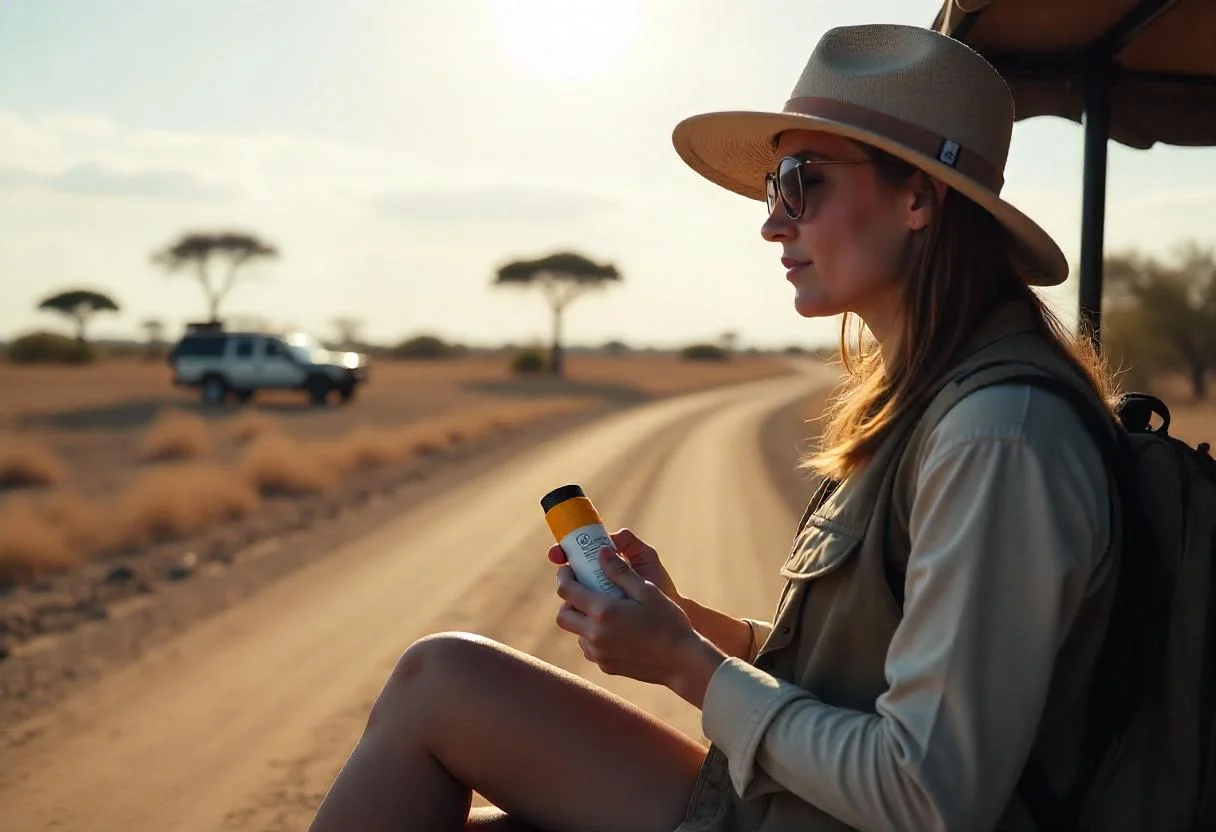
The equatorial sun burns fast. Wear a wide-brimmed hat and UV-blocking sunglasses. Apply high-SPF sunscreen every morning. Reapply after sweating. Sunstroke can spoil your safari. Drink plenty of water throughout the day. The dry heat dehydrates you quickly. Carry a reusable water bottle. Your lodge provides clean water to refill it.
In addition, limit alcohol and caffeine. They increase dehydration. Drink more water than you think you need. Signs of dehydration include headaches and tiredness. Listen to your body. Rest in the shade during the hottest hours. Game drives often pause under a tree. Use this time to cool down. Protecting yourself from the elements keeps your energy high.
First-Aid Kit and Personal Medication
Pack a basic first-aid kit. Include plasters, antiseptic cream, and painkillers. Bring antihistamines for bites and allergies. Anti-diarrhoea medication can save your trip. Rehydration salts are light and effective. Any personal medication should stay in your hand luggage. Do not pack it in checked bags. Pharmacies are scarce near the parks.
Furthermore, carry insect repellent with at least thirty percent DEET. Apply it every evening. Mosquitoes spread malaria. Wear long sleeves and trousers after sunset. Sleep under a mosquito net. Most lodges provide them. Check for holes. Tuck the net under your mattress. These safari health tips every traveler should know are simple. But they are powerful. Stay healthy and the wild will reward you.
Related posts


Leave a Comment