
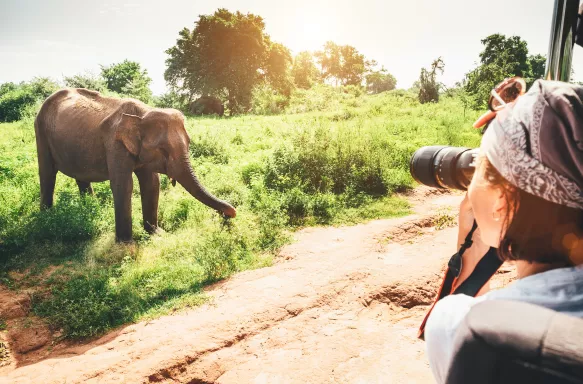
These safari photography tips for beginners will help you capture the magic of Africa. You do not need expensive gear. You need the right settings and a patient eye. The bush offers incredible moments. A lion yawns in golden light. A gorilla baby tumbles past. Your camera preserves these seconds forever. Learn a few basics and your photos will shine.
Many beginners feel overwhelmed by their cameras. They miss shots while fiddling with buttons. The best approach is simple. Set up your camera before the action starts. Know your gear well enough to adjust without looking. Practice at a local zoo or park. Your safari is not the time to learn. This guide gives you the essential tips. You will return with photos you love.
Camera Settings for Safari Success
Aperture priority mode is your best friend. Set your aperture wide open. A low f-number like f2.8 or f4 blurs the background. Your subject pops against the soft bush. Let the camera choose the shutter speed. Set ISO to auto with a reasonable maximum. The light changes fast in Africa. Your camera adapts instantly. You focus on composition, not settings.
In addition, shoot in continuous burst mode. Animals move unexpectedly. A yawn, a leap, a head turn. Multiple frames capture the perfect moment. Use a fast memory card. It clears the buffer quickly. Shoot in RAW format if you can. It preserves more detail for editing later. Even if you do not edit now, you might later. These safari photography tips for beginners start with solid camera habits.
Focus on Eyes and Action
The eyes are the soul of a wildlife photo. Always focus on the eyes. A sharp eye makes the whole image feel alive. Use single-point autofocus for precision. Position the focus point on the nearest eye. Even a slightly out-of-focus eye weakens the shot. Practice this at home. It becomes instinct after a while.
Moreover, capture behaviour, not just portraits. A gorilla eating leaves tells a story. A bird feeding its chick is pure emotion. Wait for the yawn, the stretch, the interaction. Patience is your best lens. Lower your camera occasionally. Watch the animal with your own eyes first. Understand its rhythm. Then raise the camera when the moment peaks. Your photos will feel alive and authentic.
Composition That Works
Use the rule of thirds. Imagine a grid dividing your frame into nine squares. Place the animal’s eye on one of the intersections. Leave space in the direction the animal is looking. This creates a natural, pleasing balance. Avoid placing the subject dead center every time. A little negative space adds drama. The savannah sky can be your canvas.
Furthermore, get low when you can. Shooting from a lower angle makes the animal look majestic. A lion at eye level feels powerful. A ground-level shot of a dung beetle tells a different story. Use natural frames. Branches, rocks, and grass can frame your subject beautifully. Do not be afraid to shoot into the light. A golden backlight creates stunning silhouettes. Experiment and have fun. Safari photography is about capturing the feeling, not just the animal.
Protecting Your Gear in the Bush
Dust and rain are the enemies. A sealed camera bag is your best investment. Use a rain cover when the skies open. Silica gel packets absorb moisture inside your bag. Change lenses in a sheltered spot, never in the open. A blower brush removes dust from your sensor. Clean your lens carefully each evening. A dirty lens ruins sharpness.
In addition, bring extra batteries and memory cards. Charging can be unreliable in remote lodges. A power bank gives you backup power. Download your photos each night. Label your cards. You do not want to run out of space during a lion sighting. Finally, enjoy the moment. The best photo is the one that takes you back. These safari photography tips for beginners will help you take home memories that last forever.
Related posts




Leave a Comment