
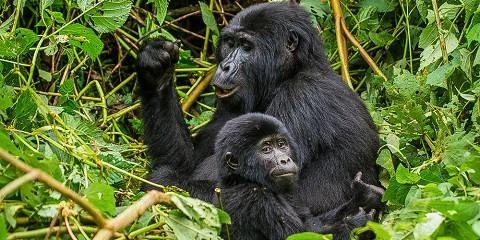
Mgahinga Gorilla Trekking vs Bwindi Gorilla Trekking. Uganda is home to two extraordinary destinations where travellers can come face to face with wild mountain gorillas — Bwindi Impenetrable National Park and Mgahinga Gorilla National Park. Both parks shelter habituated gorilla families, both sit in the misty highlands of southwestern Uganda, and both promise a once-in-a-lifetime wildlife encounter. Yet they are remarkably different in character, accessibility, atmosphere, and the kind of experience they offer. If you are planning a gorilla trekking safari and are torn between the two, this in-depth guide will help you make the right choice based on your priorities, budget, and travel style.
Understanding the Two Parks at a Glance
Bwindi Impenetrable National Park is Uganda’s most celebrated gorilla destination. Listed as a UNESCO World Heritage Site, it covers 321 square kilometres of ancient montane and lowland forest and is home to over half of the world’s remaining mountain gorilla population. With four distinct trekking sectors — Buhoma, Ruhija, Rushaga, and Nkuringo — and more than 20 habituated gorilla families, Bwindi gives travellers the widest choice of trekking routes and gorilla groups available anywhere on earth.
Mgahinga Gorilla National Park, by contrast, is Uganda’s smallest national park, covering just 33.7 square kilometres. It is part of the larger Virunga Conservation Area that stretches across Uganda, Rwanda, and the Democratic Republic of Congo. Mgahinga is home to only one habituated gorilla family — the Nyakagezi group — but the park also offers the rare opportunity to track golden monkeys, hike the dramatic Virunga volcanoes, and experience an exceptionally intimate wilderness atmosphere. It is, in short, a hidden gem.
Location and How to Get There
Bwindi is accessible from several directions. Travellers coming from Kigali, Rwanda — one of the most popular entry points — typically travel overland through the Cyanika or Katuna border crossings. This cross-border journey is one of the most scenic drives in East Africa, winding through terraced hillsides and tropical vegetation. At Kigali Transfers to Bwindi, we specialise in exactly this route, offering private, comfortable transfers that get you from Kigali directly to your lodge in Bwindi with zero hassle. You can explore our safari packages to see curated options that combine the transfer with your full gorilla trekking itinerary.
Mgahinga is located near the town of Kisoro in Kabale District — the same southwestern region as Bwindi, but positioned right at the foot of the Virunga volcanoes. Kisoro is roughly 10 to 12 hours from Kampala by road, or about five to six hours from Kigali. If you are travelling from Rwanda, Mgahinga is actually closer to Volcanoes National Park than Bwindi is, making it a natural extension for travellers doing a cross-border primate safari. Our travel guide covers the logistics of this region in detail, including road conditions and what to expect at the border.
Gorilla Permit Costs and Availability
Both parks fall under the Uganda Wildlife Authority permit system. A gorilla trekking permit in Uganda costs USD 700 per person per trek, regardless of whether you choose Bwindi or Mgahinga. This is significantly more affordable than the USD 1,500 permit in Rwanda, which makes Uganda the go-to choice for budget-conscious travellers who still want a premium experience.
The key difference lies in availability. Bwindi, with over 20 habituated gorilla families spread across four sectors, issues far more permits daily and is therefore much easier to book — even on relatively short notice. Mgahinga has only one habituated family, meaning the daily permit quota is very limited. Permits here are harder to secure and tend to sell out well in advance, particularly during peak season from June to September and December to February. If your travel dates are fixed, it is critical to book Mgahinga permits early. Working with an experienced operator like Kenlink Tours ensures your permits are secured as part of a seamless, fully-managed itinerary.
The Trekking Experience: Forest vs Volcano
The trekking experience itself differs dramatically between the two parks, and this is often the most decisive factor for travellers.
In Bwindi, you are deep inside an ancient, impenetrable rainforest. The terrain is steep, the vegetation is thick, and the atmosphere is primal and wild. Gorilla searches can take anywhere from 30 minutes to eight hours depending on the family’s movements that day. The forest is dense and alive — you trek through layers of vines, moss, giant ferns, and tree canopy that barely lets the light through. Once you find the gorilla family, you spend one hour in their presence, watching them feed, play, groom, and interact in their natural habitat. It is a profoundly moving encounter. The four trekking sectors offer different difficulty levels, so you can choose a sector suited to your fitness level. Our 3-day gorilla trekking package from Rwanda is one of the most popular ways to experience Bwindi without losing too many days from your itinerary.
In Mgahinga, the scenery shifts dramatically. Instead of dense jungle, you are trekking across open volcanic slopes with sweeping views of three volcanoes — Mount Muhabura (4,127m), Mount Gahinga (3,474m), and Mount Sabyinyo (3,669m). The landscape is more open and dramatic, and while the trek can be physically challenging due to altitude, many visitors find the scenery more immediately spectacular. The Nyakagezi group is known to be relatively settled and is often found at lower elevations, which can make for a shorter and more accessible trek on some days — though this is never guaranteed. The one-hour rule still applies once you locate the gorillas.
Wildlife Beyond the Gorillas
Bwindi is strictly gorilla country. The park is globally renowned for its primates, but it also shelters chimpanzees, L’Hoest’s monkeys, forest elephants, and over 350 bird species including 23 Albertine Rift endemics. Birders in particular find Bwindi extraordinary. However, the dense forest means most non-gorilla wildlife is heard rather than seen.
Mgahinga genuinely stands out when it comes to wildlife diversity beyond gorillas. The park is one of only two places in Uganda where you can track golden monkeys — a spectacularly beautiful and rare primate found only in the Virunga bamboo zone. The golden monkey tracking experience at Mgahinga is exceptional, and combining it with gorilla trekking on two consecutive days gives Mgahinga a unique “double primate” appeal. For travellers who want to maximise their wildlife experience without extending their trip too many days, Mgahinga offers extraordinary value. The volcanoes themselves can also be hiked — Mount Gahinga and Mount Sabyinyo are both climbable for fit adventurers, rewarding summit-seekers with views across three countries.
Accommodation Options
Bwindi’s four sectors give travellers a broad range of accommodation, from luxurious eco-lodges nestled in the forest canopy to comfortable mid-range and budget guesthouses. Whether you prefer a top-tier lodge like Bwindi Lodge or Sanctuary Gorilla Forest Camp, or a more affordable community guesthouse, Bwindi can accommodate travellers at every price point. The concentration of lodges around each sector also means there is plenty of competition, which keeps standards relatively high across the board.
Mgahinga’s accommodation options are far more limited simply because of the park’s size and relative remoteness. There are a handful of well-regarded lodges, including Mount Gahinga Lodge, which is widely regarded as one of the finest eco-lodges in Uganda. Accommodation here feels more exclusive and intimate — you are unlikely to encounter large tour groups at dinner. The downside is less choice and often higher prices for what is available. Our fleet of vehicles includes Safari Landcruiser and Toyota Hiace vans that comfortably handle the mountain roads leading to both parks, making the journey part of the adventure rather than a stress.
Which Park Should You Choose?
Choose Bwindi if you want the widest choice of gorilla families and trekking sectors, are travelling with flexibility in budget and timeframe, are interested in forest birding alongside gorilla trekking, or prefer the assurance of easier permit availability. Bwindi is also the better choice if you are combining your gorilla trek with a wider Ugandan wildlife safari — for instance, a circuit that includes Queen Elizabeth National Park, Kibale Forest, and Murchison Falls.
Choose Mgahinga if you love dramatic, open volcanic landscapes and want your trek to feel less crowded and more intimate, are keen to track golden monkeys in addition to gorillas, are planning a cross-border itinerary between Uganda and Rwanda and want to make the most of the Virunga region, or are seeking a park that feels genuinely off the beaten path.
For travellers with time to spare, the very best option is to experience both. A combined Bwindi and Mgahinga itinerary — with transfers, permits, and lodges arranged in advance — gives you the full picture of Uganda’s gorilla country and an adventure that few travellers ever get to complete.
Plan Your Gorilla Safari Today
Whether you are drawn to the deep jungle of Bwindi or the volcanic drama of Mgahinga, the journey starts with the right transfer and the right team behind you. At Kigali Transfers to Bwindi, we handle private transfers across Rwanda and Uganda, ensure your gorilla permits are in order, and connect you with fully guided safari packages that make the most of every day in the field. Contact us to ensure you get an authentic gorilla trekking adventure.
Related posts

Leave a Comment